Automation
Automation is finished when nobody runs it
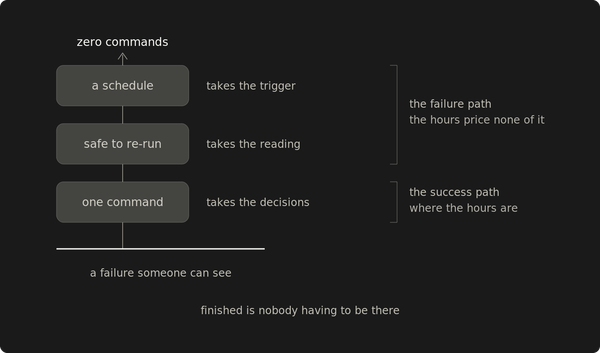
A case that counts only successful execution time buys the first step of automation. Whether the team owns the operation is decided on the failure path.
Automation
A case that counts only successful execution time buys the first step of automation. Whether the team owns the operation is decided on the failure path.

Infrastructure
The price of redundancy is the same the day after an outage as the week before. What the failure moves is the burden of proof, and it moves back.
Infrastructure
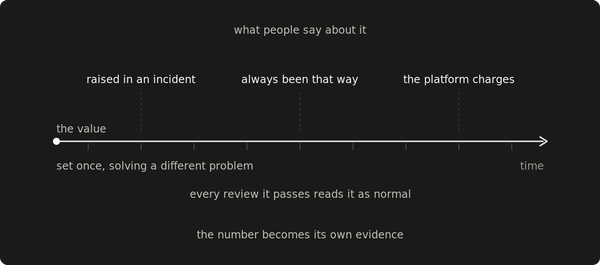
A number that never moves reads as normal in every review it passes through. Reopening one starts with a question: Who went looking for the cause?
Engineering Culture
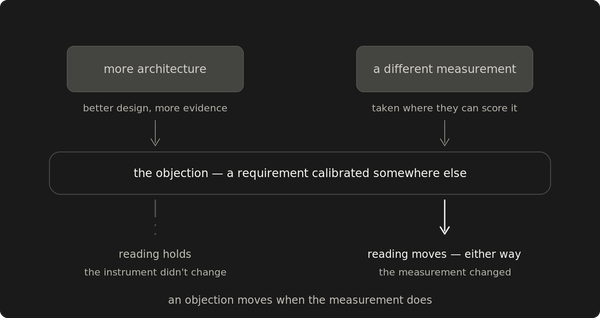
Technical objections survive better architecture when a stakeholder measures a new system against a requirement learned elsewhere.
Infrastructure
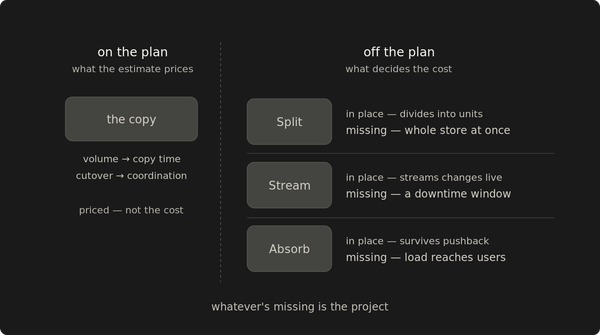
A migration estimate prices the copy. Three capabilities the system had before the plan existed decide the rest, and whatever it lacks is the project.
Infrastructure
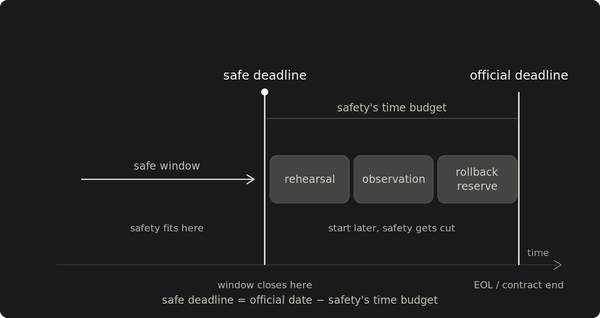
Migration safety spends time: rehearsal, phased rollout, observation, rollback. Once the schedule can't afford them, the safe migration window has closed.
Architecture
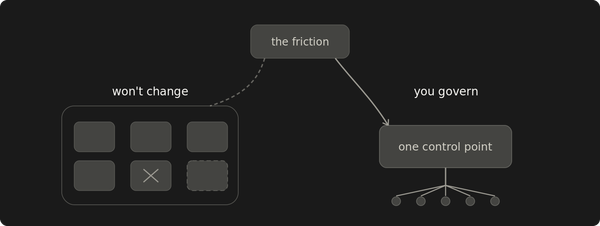
Designing around components you can't control means picking which side holds the workaround. The one you refuse to change shapes everything else.
Cost Optimization
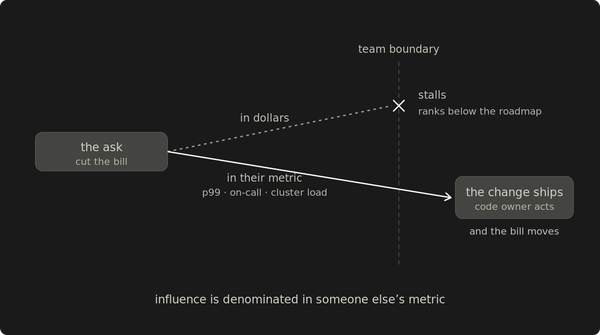
Past the configuration layer, the next dollar needs a change that only another team can make. Spend a mandate to get it, and you buy one fix and lose the next ten.
Architecture
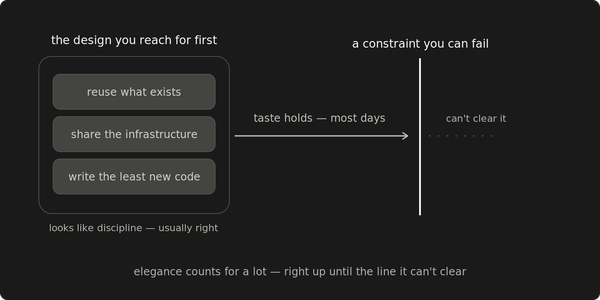
An architecture can clear every performance spec and still fail a line that has nothing to do with speed: a price ceiling, a margin it quietly destroys.
Infrastructure
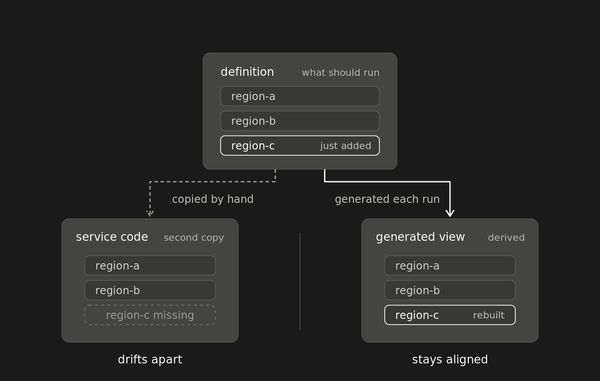
A fact about infrastructure stored in service code is a second source of truth, and two copies drift. Generate the view from the source instead.
Infrastructure
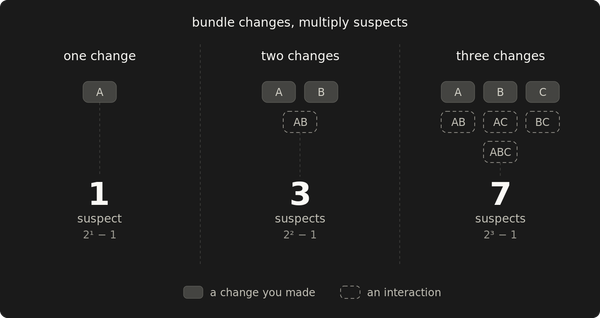
Hold every variable but one and a failure has one suspect. Bundle two and the suspects grow like the subsets: three places to look, then seven.
Infrastructure
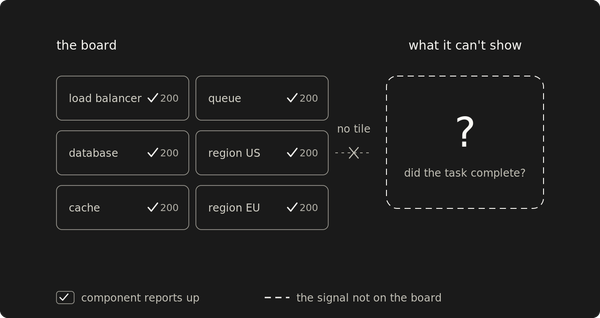
A green board means the components are up. Whether a user can finish the task is a question the system was never built to answer about itself.